
Game-based
unplugged strategy for developing computational thinking and artificial
intelligence skills in contexts with digital divide
Estrategia lúdica analógica para el desarrollo
del pensamiento computacional y la inteligencia artificial en entornos con
brecha digital

 Meliyara Sirex
Consuegra Diaz-Granados
Meliyara Sirex
Consuegra Diaz-Granados
Universidad Simón Bolívar. Colombia.
Álvaro Enrique
Diaz Quiroz
Universidad del Atlántico. Colombia.
María Ángeles
Navarro Cervantes
Universitat Oberta de Catalunya. España.
Received: 2025/11/11 Reviewed 2025/12/01 Accepted: 2026/02/19 Published: 2026/05/01
How to cite:
Consuegra Diaz-Granados,
M.S., Diaz Quiroz, A.E., & Navarro Fernández, M.A. (2026). Game-based
unplugged strategy for developing computational thinking and artificial
intelligence skills in contexts with a digital divide [Estrategia lúdica
analógica para el desarrollo del pensamiento computacional y la inteligencia
artificial en entornos con brecha digital].
Pixel-Bit,
Revista de Medios y Educación, 76,
Art. 4. https://doi.org/10.12795/pixelbit.118850
ABSTRACT
Computational Thinking (CT) and
Artificial Intelligence (AI) are essential competencies in the digital age;
however, teaching these competencies in rural areas with limited access to
technology faces major obstacles. This study proposes Titicode, an inclusive
and low-cost board game that promotes these skills in children and young people
through playful and collaborative learning. To assess its effectiveness, an
instrument based on the Computational Thinking Test (CTt) and the Artificial
Intelligence Literacy Questionnaire (AILQ) was used to evaluate the knowledge
level before and after the implementation of the game on 71 students from a
rural school in Colombia, revealing significant improvements after playing. The
research followed five phases: prototype development, measurement of students’
initial skills, implementation of the game over 12 weeks, post-game skill
assessment, and comparative analysis. Titicode appears to be an effective tool
to enhance skills in CT and AI literacy in contexts with limited access to
technology.
RESUMEN
El
Pensamiento Computacional (PC) y la Inteligencia Artificial (IA) son
competencias necesarias en la sociedad de la era digital, sin embargo, su
enseñanza enfrenta grandes obstáculos en áreas rurales con acceso limitado a
tecnología. Esta investigación propone Titicode, un juego de mesa
inclusivo y de bajo coste que promueve estas habilidades en niños y jóvenes
mediante un aprendizaje lúdico y colaborativo. Para comprobar su eficacia se
utilizó un instrumento elaborado a partir del Computational Thinking Test (CTt)
y el Artificial Intelligence Literacy Questionnaire (AILQ) donde se evaluó el
nivel de conocimiento de 71 jóvenes de una escuela rural en Colombia antes y
después de la aplicación del juego, encontrando mejoras significativas después
de su aplicación. La investigación se realizó en cinco fases: elaboración de
prototipo, medición de habilidades antes del juego, implementación del juego
durante 12 semanas, medición de habilidades después del juego y análisis
comparativo. Titicode sugiere ser una herramienta eficaz para mejorar
las habilidades en PC y la alfabetización en IA en contextos con acceso
limitado a la tecnología.
KEYWORDS· PALABRAS CLAVES
Digital Competence; Access
to Technology; Artificial Intelligence; Digital Divide; Inclusive Education
Competencia digital; Acceso
a tecnología; Inteligencia artificial; Brecha digital; Educación inclusiva
1. Introduction
The rapid development of digital technologies and
their widespread use in almost every aspect of life in modern society (Soh et
al., 2025) have turned computational thinking (CT) (Wing, 2006; Grover &
Pea, 2018) and artificial intelligence (AI) (Duque-Rodriguez et al., 2024) into
essential skills. Several studies have highlighted the development of these
skills in basic education (Engelhardt et al., 2016; Voogt et al., 2015;
Nozato-López, 2024) due to their direct relation with mathematical, linguistic,
and abstract reasoning skills (Bers, 2020; Grover & Pea, 2013) and
importance in present-day labor markets (Piazza & Mengual-Andrés, 2020).
Initiatives such as AI for K-12 in the United States and Elements of AI in Europe have fostered CT and AI education from an
early age, devising curriculum standards and accessible teaching resources
(Tedre et al., 2021). However, the implementation of such educational contents
involves several challenges, such as the lack of accessible teaching resources,
the technological divide between urban and rural regions (Morales et al.,
2024), and the lack of teacher-specific training (Voogt et al., 2015). This is
the case in many Latin American regions, which feature considerable inequality
in terms of technology access (Flores & Núñez, 2024; Quiroz-Vallejo et al.,
2021). The digital divide encompasses the factors of technical availability,
social inclusion, and human development. Thus, it is linked to structural
inequalities such as poverty, social exclusion, unemployment, and unequal
resource distribution (Van Dijk, 2017).
As a potential solution to these challenges,
this study analyzes a board game as an unplugged (analog), pedagogical, inclusive, adaptable, and
affordable resource that will allow teachers without technological training to
foster CT skills (Sin Yoon & Md Khambari, 2022) and AI use (El-Hamamsy et
al., 2022) in primary and secondary school students (Montes-León et al., 2020).
Several studies note that play boosts student
motivation (Berland & Lee, 2011; Deterding et al., 2011) and enhances
meaningful learning, collaboration (Zagal et al., 2006; Kafai & Burke,
2015), and retention of complex concepts (Kazimoglu et al., 2012; Gee, 2003).
Specifically, analog games gain importance as an equitable tool, making the
acquisition of technological knowledge possible in rural contexts (Vita-Barrull
et al., 2023) with technological limitations (Nicolalde & Narváez, 2025) by
promoting cognitive development, enabling acquisition of key technological
skills, and strengthening learning processes (Robles et al., 2024) from early
stages (Salleh, 2023).
This study develops and assesses a board game
named Titicode that seeks to enhance
CT skills and AI literacy. The study population studied is located in a rural
area of the Caribbean Region of Colombia that has limited access to
technological resources, poor connectivity, and a divide in digital skills in
teachers and students (Ministerio de Tecnologías de la Información y las
Comunicaciones [MinTIC], 2025). An initial diagnostic investigation was
performed to identify the participants’ familiarity with the notions of logic,
algorithms, programming and basic AI knowledge
While studies that investigate similar games
such as Crabs & Turtles (Tsarava
et al., 2018), RoboBUG (Sin Yoon
& Md Khambari, 2022), and Code &
Go Robot Mouse (Bakala et al., 2022) focus on basic CT concepts, Titicode articulates CT and AI within a
single, playful environment. This approach aligns with frameworks such as AI4K12 (Touretzky et al., 2019) that
promote an integrative, contextual, and evaluative methodology. Thus, this
study designed a resource to enhance the gaming experience beyond sequencing instructions,
boosting students’ motivation and complex decision-making and thereby
contributing to the field of inclusive digital education.
2. Creating a Board Game to
Boost CT and AI Skills
Titicode is designed from a student-centered constructivist
perspective, which recognizes that learning occurs when motivation, social
interactions, and opportunities to apply knowledge in real-life contexts are
present (Gutiérrez-Medina et al., 2024). Each game lasts 45–60 minutes and
allows for 2–4 players who face challenges and dilemmas.
2.1. Game
Parts
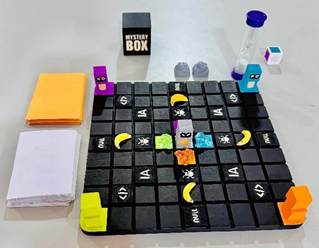
Titicode consists of 11 parts and 4 card types (Figure 1). The
9 × 9 board and player tokens strengthen skills such as planning, logical
thinking, and algorithmic structuring (Grover & Pea, 2013) by enabling
visualization of action flows within a specific spatial environment (Engelhardt
et al., 2016).
Meanwhile, the hourglass boosts mental agility and
efficient decision-making. The Mystery Box incorporates elements of surprise,
which are critical for developing abstraction skills, interpretations of
unforeseen events, and strategic thinking (Shute et al., 2017).
Rocks simulate execution errors that require the
application of conditional decisions, reinforcing CT-specific processes
(Kalelioğlu et al., 2016).
The board tokens (Error, CT, AI, and NULL)
deepen the learning experience by representing key CT principles (Grover &
Pea, 2013) and AI (Ng et al., 2021), such as exception handling, error
debugging, interpretation of missing data, and conditional execution (Brennan
& Resnick, 2012).
Finally, the use of gems and bananas as goals
enhances intrinsic motivation (Kapp, 2012), the sense of achievement, and
engagement (Ortiz-Colón et al., 2018), boosting reinforcement learning (Sutton
& Barto, 2018) and helping internalize complex concepts (Papavlasopoulou et
al., 2017).
Figure 1
Game parts of
Titicode
Source: own
elaboration.
Regarding the cards, movement instruction cards
enable actions to be structured in a logical sequence (Goin & Quijano,
2023). Meanwhile, the debug or bug cards, inspired by games such as Gidget (Lee et al., 2014) and RoboBUG (Sin Yoon & Md Khambari,
2022), help with error identification and correction, an essential skill in
programming. There are several categories of
Titicode’s design
articulates its play-pedagogical parts with the variables analyzed in the study.
The movement instruction cards, the 9×9 board, the rocks, the error and NULL
cards and tokens, the mystery box, and the challenge cards strengthen CT
skills. Meanwhile, the AI cards and tokens support the measurement of variable
AI literacy.
3. Methodology
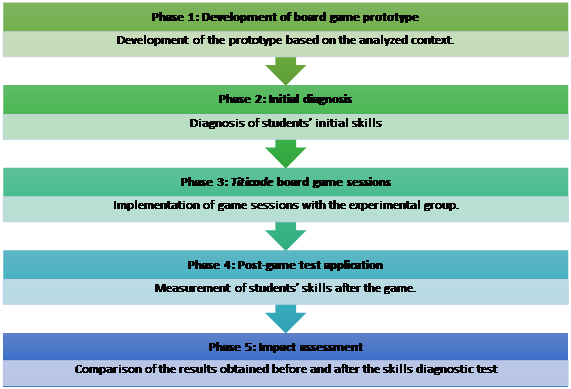
The study was developed in five phases (Figure
2) with quantitative data through a quasi-experimental design (Creswell &
Creswell, 2018) involving
Figure 2
Experiment
phases
Source: own
elaboration.
Phase 1 consisted of creating the game with an
appropriate pedagogical approach (Brennan & Resnick, 2012), ensuring its
educational relevance and sustainability to achieve optimal results in learning
key concepts in CT (Sáez-López et al., 2016) and AI (Long & Magerko, 2020).
Phase 2 applied a diagnostic test of the
participants’ CT skills and AI literacy. In Phase 3, a prototype of the board
game was implemented for 12 weeks (1 session per week) in groups of 3–4
students. In Phase 4, a diagnostic test was performed after the game to measure
the development of the assessed variables.
Finally, in Phase 5, the results were analyzed with
the information obtained from the tests, with the aim of measuring the impact
of the game on students’ CT skills development and AI literacy
3.1.
Participants and Sample
The study employed an intentional,
non-probabilistic sampling procedure, selecting 71 students aged 10–14 years with
limited access to technological resources and digital skills divides (MinTIC,
2025). This age range was selected because the study aimed to conduct the
analysis in a key stage of academic development, where students begin to face
more complex challenges and require tools that boost their logical and creative
thinking (Barragán Perea, 2023).
All collected data were kept confidential; the study
was conducted under the supervision and endorsement of the educational
institution, teachers, and the university, and prior consent was obtained from
the students’ legal guardians (Molina Montoya, 2018; Klock et al., 2023).
3.2.
Diagnostic Test of CT and IA Knowledge
To analyze Titicode’s
impact on students, two tests were used as a benchmark: The Computational
Thinking test (CTt) developed by Román-González et al. (2017) and the
Artificial Intelligence Literacy Questionnaire (AILQ) from Ng et al. (2024).
Modifications were made to adapt these questionnaires to the target population
(Mokkink et al., 2018), considering that simplicity improves the quality of the
data collected (De Leeuw, 2011).
Ultimately, an 18-question instrument was created,
applied individually by means of Google Forms, which took each student an
approximate duration of 45 minutes to complete. The first 10 questions were
based on the CTt and measured the development of CT skills through four
dimensions: logical and mathematical reasoning, abstraction, error debugging,
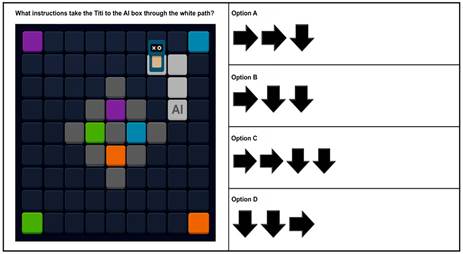
and basic programming and sequencing principles. To ensure visual consistency
between the test and the board game, graphic adaptations of the CTt were made to
the images, scenarios, and characters of each question, integrating them into
the style of the Titicode board
(Figure 3). However, the use of an abstract color palette may represent a
limitation, as it could increase cognitive load by requiring additional effort
to interpret hazards, pathways and targets (Sweller et al., 2011).
Figure 3
Adaptation of the test to the Titicode game.
Source: own
elaboration.
The final eight questions, based on the AILQ, aimed to
assess the participants’ AI literacy, calculated based on cognitive and
affective dimensions (Ng et al., 2023). Affective learning, or level of
interest in AI, comprises factors measuring students’ feelings in terms of
intrinsic motivation, self-efficacy, professional interest, and confidence in
AI learning. Meanwhile, cognitive learning or knowledge level refers to factors
such as students’ attainment of skills in knowing, understanding, using, and
applying AI. The responses were simplified to a 3-point Likert scale (1 =
Disagree, 2 = Neutral, 3 = Agree), to favor participant understanding, avoid
semantic confusion (Alan & Atalay, 2020; Naegeli et al., 2018), and improve
response consistency and reliability (Mellor & Moore, 2014).
3.3.
Instruments for Data Analysis
The data analysis is divided into two parts relating
to CT and AI, based on data collected in the tests applied to the participants
before and after the Titicode
educational intervention.
To measure CT skills, we used sub-variables derived
from percentage hit rates
The paired Student’s t-test was applied to identify significant differences between the
means of the hit rates before and after using Titicode. This approach is suitable for dependent samples, enabling
an evaluation of whether the changes found are statistically significant. A p-value < .05 was considered to
indicate rejection of the null hypothesis of no difference.


Although the Shapiro–Wilk test applied to paired
differences indicated significant deviations from normality, the Student’s t-test continued to be used. This
decision is based on the robustness of the t-contrast
regarding deviations from the assumption of normality, especially in moderate
or large sample sizes and when the focus is on the comparison of means
(Sullivan & D’Agostino, 1992; Lumley et al., 2002; Norman, 2010). Moreover,
the discrete nature of the variables and the presence of floor and ceiling effects
explain the asymmetry observed in the differences.
Cohen’s d
(Cohen, 1988) was used to measure effect sizes. This measure quantifies the
magnitude of the change in terms of standard deviations, with values ranging
from 0.20 (small) to above 0.80 (large). In pretest–
To analyze the effect on AI literacy, discrete
variables based on Likert-type survey responses were used to capture the
affective (interest and motivation) and cognitive (conceptual understanding and
knowledge) dimensions.
The Wilcoxon signed-rank test was employed. This
nonparametric test is suitable for ordinal or discrete data such as those from
Likert scales (Derrick & White, 2017) that do not assume normality and
handle paired samples. This test is resistant to common outliers in subjective
data and assesses differences in the distributions of before and after response
ranks, with a p-value < .05
considered to indicate significant changes.


Additionally, to estimate effect sizes, the
rank-biserial correlation was calculated, which adapts the point-biserial
correlation to ordinal data and measures the strength of the relation between
the intervention (before/after) and the responses.
The instruments’ internal consistency was
estimated based on the pretest measurements. In the case of the CTt, comprising
10 dichotomous items, the KR-20 coefficient was used and obtained a value of
0.24. As per Streiner (2003), excessively high alphas may reflect redundancy
between items rather than adequate representation of the construct assessed. In
educational achievement tests integrating
Meanwhile, the internal consistency of the AILQ,
composed of eight items of an affective and cognitive nature, was estimated by
means of Cronbach’s alpha, where
4. Results
4.1. CT
Skills
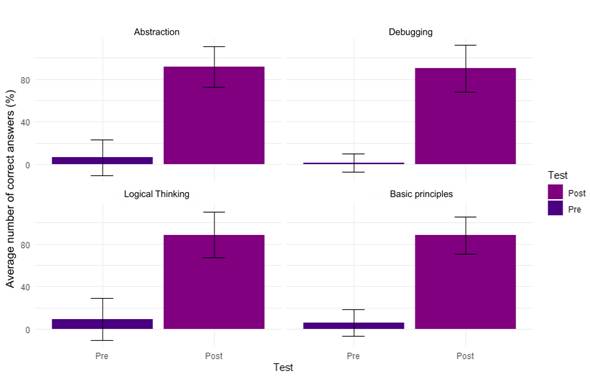
The results show significant improvements in all
analyzed dimensions (Figure 4), with an increase in hit rate from less than 6%
before the Titicode intervention to
nearly 90% afterward. This change should be interpreted considering the
participants’ limited previous exposure to CT content. Thus, small initial
variations would generate large percentage increases without overestimating the
effect. Table 1 shows means, standard deviations, and 95% confidence intervals
before and after the intervention, confirming that there is a floor effect in
the pretest and possible ceiling effect in the posttest in some dimensions.
Descriptive statistics of CT skills in
|
Variable |
Test |
N |
Mean (SD) |
95% CI |
|
Logical and
mathematical reasoning |
Before |
71 |
9.29
(19.58) |
[4.62, 13.96] |
|
Logical and
mathematical reasoning |
After |
71 |
88.57
(21.15) |
[83.53, 93.61] |
|
Abstraction |
Before |
71 |
6.43
(16.86) |
[2.41,
10.45] |
|
Abstraction |
After |
71 |
91.43
(18.98) |
[86.90, 95.95] |
|
Debugging or error |
Before |
71 |
1.43
(8.39) |
[0.00, 3.43] |
|
Debugging or error |
After |
71 |
90.00
(21.87) |
[84.79, 95.21] |
|
Basic principles in programming and sequencing |
Before |
71 |
6.07 (12.36) |
[3.12, 9.02] |
|
Basic principles in programming and sequencing |
After |
71 |
88.21 (17.40) |
[84.06, 92.36] |
Figure 4
Average hit rate per dimension in CT skills tests
Source:
Prepared by the authors.
The results of the inferential tests confirm the
improvements found in the descriptive analysis, highlighting significant
differences and large effects that can be attributed to the Titicode intervention.
The paired Student’s t-test (Table 2) reveals highly significant differences in all
variables, with extremely low p-values. These
findings reject the null hypothesis and confirm that the changes are not
random.
Student’s t-test and Cohen’s d
test performed on CT skills
|
Variable |
Student’s t (df = 70) |
p-value |
Cohen’s d |
Effect |
|
Logical
and mathematical reasoning |
23.0 |
< .001 |
3.89 |
Very large |
|
Abstraction |
28.9 |
< .001 |
4.74 |
Very large |
|
Debugging
or error |
32.5 |
< .001 |
5.35 |
Very large |
|
Basic principles in programming and sequencing |
32.9 |
< .001 |
5.44 |
Very large |
Table 2 shows a very high Cohen’s d in all cases, highlighting the
significant pedagogical impact of the intervention.
In logical-mathematical reasoning, a transition
from poor performance to solid mastery is observed, indicating that the
intervention strengthened the participants’ ability to apply structured
instructions in tasks such as character movements or drawings. In abstraction,
the large effect size (d = 4.74) indicates a clear improvement in identifying
missing steps and conceptualization, which are key aspects in programming.
Debugging shows one of the clearest changes (d = 5.35), denoting progress in
error correction. Finally, basic programming principles show the highest effect
(d = 5.44), evidencing a substantial improvement in sequencing and repetition
of instructions due to an effective practical intervention.
4.2. AI
Literacy
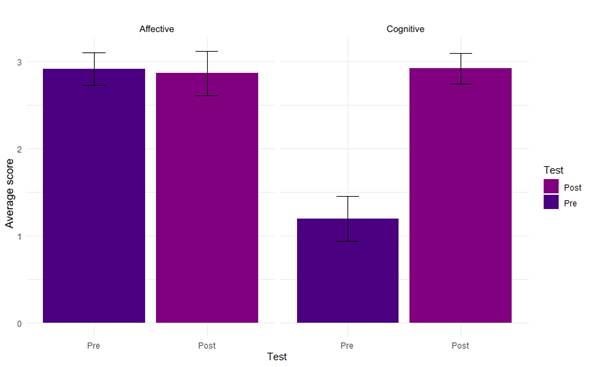
Figure 5 compares the mean scores (on a Likert
scale from 1 to 3, where 1 = Disagree, 2 = Neutral and 3 = Agree) obtained for
the two variables analyzed before and after the Titicode intervention. Each panel represents a dimension (affective
and cognitive), with the error bars indicating the standard deviation.
Figure 5
Likert scores by dimension on
the AI literacy test.
Source: own
elaboration.
The Wilcoxon signed-rank test and the biserial
rank correlation reveal different patterns (Table 3). For the affective
dimension, the p-value (.289) is
greater than .05. Thus, the null hypothesis is not rejected and no significant
difference is observed between the results of the diagnostic test before and
after the intervention. The biserial correlation is low (.089), confirming a
minimal effect and suggesting that the intervention did not alter motivational
aspects greatly.
Table 3
Wilcoxon statistic and
biserial correlation
|
Variable |
Wilcoxon statistic |
p-value |
Biserial correlation |
|
Affective |
2316 |
.289 |
.089 |
|
Cognitive |
5041 |
< .001 |
.898 |
By contrast, for the cognitive dimension, the p-value is extremely low, rejecting the
null hypothesis and confirming highly significant differences. The high
biserial correlation (.898) indicates there is a large effect, validating the
effectiveness of Titicode in
improving AI literacy from the cognitive dimension.
5. Discussion
Titicode is shown to be an effective tool for early-age CT development
and found to have pedagogical and play value, similar to other games such as Crabs & Turtles (Tsarava et al.,
2018) and Code & Go Robot Mouse
(Bakala et al., 2022).
Unlike these games, Titicode can also
improve AI literacy, which had not been analyzed in previous research.
However, these findings should be interpreted
while considering certain methodological conditions. The large effect sizes may
be influenced by the participants’ poor initial performance level, indicating a
possible floor effect in the pretest and an increase in changes after the
intervention, as well as a ceiling effect in some dimensions in the posttest.
The close alignment between the goals of the
intervention and the instrument boosts internal validity; however,
complementary measures should be included to assess the transfer of learning to
other contexts in future research.
Finally, the use of non-probability sampling
limits the generalizability of the results, and the lack of a control group
makes it hard to isolate the effect of the intervention from possible threats
to internal validity, such as repetition-based learning. Despite these
limitations, the pedagogical coherence of the game design and the consistency
of the improvements found suggest that the changes cannot be attributed to
these factors only. Rather, these changes correspond, to a large extent, to the
educational intervention implemented.
6. Conclusions
The study’s findings demonstrate the potential
of Titicode as an effective and inclusive
teaching strategy that can transform abstract concepts into concrete
experiences, improving the CT skills and AI literacy of students in
environments with limited access to technology. Its versatility allows
replication and scaling in different educational environments.
According to the analyses, the students’ scores
in the CT dimensions increased from below 6% before the intervention to nearly
90%, proving the significance of this method. In terms of AI literacy, in the
cognitive dimension, the participants’ understanding of fundamental concepts
improved; in the affective dimension, the study found that students’ emotional
attitudes toward AI were high before and after the intervention.
Several lines of research arise from this
analysis, such as the evaluation of its long-term impact, exploring its
application in other types of populations, deepening the inclusion of emotional
elements, motivation, advanced gamification, and critical appropriation of
emerging technologies.
Finally, this study shows that board games can
be strategic allies in education that can be adapted for different initiatives
aimed at developing key skills in the digital era.
Authors’ contributions
Author 1: conceptualization, methodology, validation,
formal analysis, research, supervision, visualization, writing - original
draft, writing-revision and editing. Author 2: conceptualization, game
creation, methodology, validation, formal analysis, research, visualization,
writing - original draft, writing-revision and editing; Author 3: methodology,
software, formal analysis, writing-revision and editing, visualization.
Funding
Funding for the translation of the article was
provided by Universidad Simón Bolívar.
Ethical Approval
The
intervention has been approved by the Ethics Committee of Universidad Simón
Bolívar as per Project Approval Certificate No.0539 for the
PRO-CEI-USB-CE-0606-00 Project.
Conflict of Interest
The authors declare that there
is no conflict of interest.
References
Alan, Ü., & Atalay
Kabasakal, K. (2020). Effect of number of response
options on the psychometric properties of Likert-type scales used with
children. Studies in Educational
Evaluation, 66, 100895. https://doi.org/10.1016/j.stueduc.2020.100895
Bakala, E., Gerosa, A., Hourcade, J. P., Tejera, G.,
Peterman, K., & Trinidad, G. (2022). A Systematic Review of Technologies to
Teach Control Structures in Preschool Education. Frontiers in
psychology, 13,
911057. https://doi.org/10.3389/fpsyg.2022.911057
Barragán Perea, E. A.
(2023). Pensamiento computacional y programación en la formación de estudiantes
desde edades tempranas. Revista
Educación, 47(2), 1–18. https://doi.org/10.15517/revedu.v47i2.53645
Berland, M. & Lee,
V. R. (2011). Collaborative Strategic Board Games as a Site for
Distributed Computational Thinking. International
Journal of Game-Based Learning (IJGBL), 1(2),
65-81. https://doi.org/10.4018/ijgbl.2011040105
Bers, M. U. (2020). Coding as a playground: Programming and computational thinking in the
early childhood classroom (2nd ed.). Routledge. https://doi.org/10.4324/9781003022602
Brennan, K., & Resnick, M. (2012). New Frameworks for
Studying and Assessing the Development of Computational Thinking. Proceedings of the 2012 Annual Meeting of
the American Educational Research Association, 1, Vancouver, 13-17 April
2012, 25. http://bit.ly/3JKzzhf
Casal-Otero, L., Catala, A., Fernández-Morante, C.,
Taboada, M, Cebreiro, B. & Barro, S. (2023). AI literacy
in K-12: a systematic literature review. International
Journal of STEM Education, 10(29). https://doi.org/10.1186/s40594-023-00418-7
Cohen, J. (1988). Statistical
Power Analysis for the Behavioral Sciences (2nd ed.). Routledge. https://doi.org/10.4324/9780203771587
Cortina, J. M. (1993). What is coefficient alpha? An
examination of theory and applications. Journal
of Applied Psychology, 78(1), 98–104. https://doi.org/10.1037/0021-9010.78.1.98
Creswell, J. W., & Creswell, J. D. (2018). Research design: qualitative, quantitative,
and mixed methods approaches. Fifth edition. SAGE. http://bit.ly/45Ah7QU
De Leeuw, E. D. (2011). Improving data quality when surveying
children and adolescents: Cognitive and social development and its role in
questionnaire construction and pretesting.
Academy of Finland Conference Report. http://bit.ly/43NjzTn
Del-Moral-Pérez, M.E., López-Bouzas, N., &
Castañeda-Fernández, J. (2025). Microrrelatos, codificación robótica,
aplicaciones digitales y realidad aumentada para potenciar el pensamiento
computacional infantil [Micro-stories, Robotic Coding, Digital Applications,
and Augmented Reality to Enhance Children's Computational Thinking]. Pixel-Bit.
Revista de Medios y Educación, 73, art.8. https://doi.org/10.12795/pixelbit.115193
Derrick, B., & White, P. (2017). Comparing Two
Samples from an Individual Likert Question. International
Journal of Mathematics and Statistics, 18(3),
1-13. http://bit.ly/40FWa4i
Deterding, S., Sicart, M., Nacke, L., O’Hara, K. &
Dixon, D. (2011). Gamification: Using game design elements in non-gaming
contexts. Proceedings of the 2011 Annual
Conference Extended Abstracts on Human Factors in Computing Systems, 66, 2425 - 2428.
https://doi.org/10.1145/1979742.1979575
Duque-Rodríguez, J.,
Piña-Ferrer, L., Isea-Argüelles, J., & Comas-Rodríguez, R. (2024).
Aprendizaje tecnológico desde los primeros años de escolaridad en la era de la
inteligencia artificial. CIENCIAMATRIA,
10(18), 151-167. https://doi.org/10.35381/cm.v10i18.12475
El-Hamamsy, L.,
Zapata-Cáceres, M., Barroso, E. M., Mondada, F., Zufferey, J. D., & Bruno,
B. (2022). The Competent Computational Thinking Test: Development
and Validation of an Unplugged Computational Thinking Test for Upper Primary
School. Journal of Educational Computing
Research, 60(7), 1818-1866. https://doi.org/10.1177/07356331221081753
Engelhardt, K., Punie, Y., Chioccariello, A., Ferrari,
A., Dettori, G., Kampylis, P., & Bocconi, S. (2016). Developing
computational thinking in compulsory education – Implications for policy and
practice, Punie, Y.(editor) and Kampylis, P.(editor), Publications Office. https://data.europa.eu/doi/10.2791/792158
Flores Jaramillo, J.
D., & Nuñez Olivera, N. R. (2024). Aplicación de Inteligencia Artificial en
la Educación de América Latina: Tendencias, Beneficios y Desafíos. Revista Veritas De Difusão Científica, 5(1),
01–22. https://doi.org/10.61616/rvdc.v5i1.52
Gee, J. P. (2003). What video games have to teach us
about learning and literacy. Computers
in Entertainment (CIE), 1(1),
20. https://doi.org/10.1145/950566.95059
Goin, M. M. J., &
Quijano, M. T. (2023). Desarrollo y análisis de un juego de mesa algorítmico
para favorecer el pensamiento computacional. Revista Iberoamericana De Tecnología En Educación Y Educación En
Tecnología, (35), e10. https://doi.org/10.24215/18509959.35.e10
Grover, S. & Pea, R. (2013). Computational
Thinking in K–12: A Review of the State of the Field. Educational Researcher, 42(1), 38-43. https://doi.org/10.3102/0013189X12463051
Grover, S., & Pea, R. (2018). Computational
Thinking: A Competency Whose Time Has Come. In S. Sentance , E. Barendsen &
C. Schulte (Ed.). Computer Science Education: Perspectives on Teaching and
Learning in School (pp. 19–38). London. Bloomsbury
Academic. Retrieved June 12, 2025, from http://dx.doi.org/10.5040/9781350057142.ch-003
Gutiérrez-Medina, L.,
Arrué-Quezada, G., & Illanes-Aguilar, L. (2024). Juegos de mesa como
inductor de la Motivación para el aprendizaje en adolescentes: Una revisión
sistemática. Revista de estudios y
experiencias en educación, 23(52),
195-213. https://doi.org/10.21703/rexe.v23i52.2429
Kafai, Y. B., & Burke, Q. (2015). Constructionist
gaming: Understanding the benefits of making games for learning. Educational Psychologist, 50(4),
313-334. https://doi.org/10.1080/00461520.2015.1124022
Kalelioğlu, F., Gülbahar, Y., & Kukul, V.
(2016). A framework for computational thinking based on a
systematic research review. Baltic
Journal of Modern Computing, 4(3), 583-596. https://bit.ly/4moM1SR
Kapp, Karl. (2012).
The gamification of learning and instruction: Game-based methods and strategies
for training and education. San Francisco, CA: Pfeiffer. https://doi.org/10.1145/2207270.2211316
Kazimoglu, C., Kiernan, M., Bacon, L. & MacKinnon,
L. (2012). Learning Programming at the Computational Thinking
Level via Digital Game-Play. Procedia
Computer Science, 9, 522-531. https://doi.org/10.1016/j.procs.2012.04.056
Klock, A.C.T., Santana, B.S., Hamari, J. (2023). Ethical
Challenges in Gamified Education Research and Development: An Umbrella Review
and Potential Directions. In: Toda, A., Cristea, A.I., Isotani, S. (eds) Gamification Design for Educational
Contexts. Springer, Cham. https://doi.org/10.1007/978-3-031-31949-5_3
Lakens, D. (2013). Calculating and reporting effect
sizes to facilitate cumulative science: A practical primer for t-tests and
ANOVAs. Frontiers in Psychology, 4(863).
https://doi.org/10.3389/fpsyg.2013.00863
Lee, M. J., Bahmani, F., Kwan, I., Laferte, J.,
Charters, P., Horvath, A., Luor, F., Cao, J., Law, C., Beswetherick, M., Long,
S., Burnett, M., & Ko, A. J. (2014). Principles of a debugging-first puzzle
game for computing education. In Proceedings - 2014 IEEE Symposium on Visual Languages and Human-Centric Computing
VL/HCC, Melbourne VIC, Australia, 57-64. https://doi.org/10.1109/VLHCC.2014.6883023
Long, D. & Magerko, B. (2020). What is AI
Literacy? Competencies and Design
Considerations. In Proceedings of the 2020 CHI Conference on Human Factors in
Computing Systems (CHI '20). Association for Computing Machinery, New York,
NY, USA, 1–16. https://doi.org/10.1145/3313831.3376727
Lumley, T., Diehr, P., Emerson, S., & Chen, L.
(2002). The importance of the normality assumption in large public health data
sets. Annual review of public health, 23(1), 151-169. https://doi.org/10.1146/annurev.publhealth.23.100901.140546
Mellor, D. & Moore, K.A. (2014). The Use of Likert
Scales With Children. Journal of Pediatric Psychology, 39 (3), 369–379. https://doi.org/10.1093/jpepsy/jst079
Ministerio de
Tecnologías de la Información y las Comunicaciones (MinTIC). (2025, 17 de
diciembre). Índice Sintético Educación Digital 2022-2023. Observatorio Nacional
de Tecnologías de la Información y las Comunicaciones (ONTIC). Recuperado de https://bit.ly/45TsjIq
Mokkink, L. B., Terwee,
C. B., Patrick, D. L., Alonso, J., Stratford, P. W., Knol, D. L., Bouter, L.
M., & de Vet, H. C. W. (2018). COSMIN
methodology for systematic reviews of Patient-Reported Outcome Measures
(PROMs): User manual. http://bit.ly/3HJFemV
Molina Montoya, N. P.
(2018). Aspectos éticos en la investigación con niños. Ciencia Y Tecnología Para L a Salud Visual Y Ocular, 16(1), 75-87. https://doi.org/10.19052/sv.4348
Montes-León, H., Hijón-
Neira, R., Pérez-Marín, D., & Montes-León, S. R. (2020). Mejora del
Pensamiento Computacional en Estudiantes de Secundaria con Tareas Unplugged. Education in the Knowledge
Society (EKS), 21(12). https://doi.org/10.14201/eks.23002
Morales Jaramillo, M.,
Sosa Toapanta, J., Garofalo Sosa, G., & Escobar Contreras, K. (2024). La
inteligencia artificial una herramienta benéfica o perjudicial para el
aprendizaje académico en el Ecuador. Polo
del Conocimiento, 9(12), 1476-1490. https://doi.org/10.23857/pc.v9i12.8557
Naegeli, A. N., Hanlon, J., Gries, K. S., Safikhani,
S., Ryden, A., Patel, M., Crescioni, M., & Vernon, M. (2018). Literature
review to characterize the empirical basis for response scale selection in
pediatric populations. Journal of
patient-reported outcomes, 2 (39). https://doi.org/10.1186/s41687-018-0051-8
Ng, D.T.K., Leung, J.K.L, Chu, S.K.W. & Qiao,M.S. (2021) Conceptualizing AI
literacy: An exploratory review. Computers
and Education: Artificial Intelligence, 2,
100041, ISSN 2666-920X. https://doi.org/10.1016/j.caeai.2021.100041
Ng, D.T.K., Leung, J.K.L., Su, J., Ng, R.C.W. &
Chu, S.K.W. (2023) Teachers’ AI digital competencies and twenty-first century
skills in the post-pandemic world. Education
Tech Research and development, 71, 137-161. https://doi.org/10.1007/s11423-023-10203-6
Ng, D.T.K., Wu, W., Leung, J.K.L., Chiu, T.K.F., &
Chu, S.K.W. (2024). Design and validation of the AI literacy questionnaire: The
affective, behavioural, cognitive and ethical approach. British Journal of Educational Technology, 55(3), 1082–1104. https://doi.org/10.1111/bjet.13411
Nicolalde Jaramillo, S.G., & Narvaéz Valverde,
M.M. (2025). La
inteligencia artificial en la educación básica: innovaciones, desafíos y
perspectivas futuras. Revista Ecos De La Academia,
11(21), e1218. https://doi.org/10.53358/ecosacademia.v11i21.1218
Norman, G. (2010). Likert scales, levels of
measurement and the “laws” of statistics. Advances in health sciences education, 15(5), 625-632. https://doi.org/10.1007/s10459-010-9222-y
Nozato-López, M. J. (2024). La inteligencia artificial en
educación: consideraciones éticas y fomento al pensamiento crítico. RECIE. Revista Electrónica Científica De
Investigación Educativa, 8, e2357. https://doi.org/10.33010/recie.v8i0.2357
Ortiz-Colón, A.-M.,
Jordán, J., & Agreda, M. (2018). Gamificación en educación: una panorámica
sobre el estado de la cuestión. Educação
& Pesquisa, 44, e173773. https://doi.org/10.1590/S1678-4634201844173773
Papavlasopoulou, S., Giannakos, M. N., & Jaccheri,
L. (2017). Empirical studies on the Maker Movement, a promising
approach to learning: A literature review.
Entertainment Computing, 18, 57-78. https://doi.org/10.1016/j.entcom.2016.09.002
Piazza, A., & Mengual-Andrés, S. (2020).
Computational thinking and coding in primary education: scientific productivity
on SCOPUS. Pixel-Bit, Revista de Medios y Educación, 59,
147–181. https://doi.org/10.12795/pixelbit.79769
Quiroz-Vallejo, D. A.,
Carmona-Mesa, J. A., Castrillón-Yepes, A., & Villa-Ochoa, J. A. (2021).
Integración del pensamiento computacional en la educación primaria y secundaria
en Latinoamérica: una revisión sistemática de literatura. RED. Revista de Educación a Distancia, 21(68), Artíc. 7. https://doi.org/10.6018/red.485321
Robles Carmona, E. J., Vergara Oliveros, J. J.,
Giraldo Cardozo, J. C., & Madera Doval, D. P. (2024). Enfoque stem+ y gamificación para
desarrollar el pensamiento computacional en educación básica. Acta ScientiÆ InformaticÆ, 8(8), 23-28. https://doi.org/10.21897/26192659.3642
Rodríguez-Martínez, J.
A., González-Calero, J. A., & Sáez-López, J. M. (2019). Computational
thinking and mathematics using Scratch: an experiment with sixth-grade
students. Interactive Learning
Environments, 28(3), 316–327. https://doi.org/10.1080/10494820.2019.1612448
Román-González, M., Pérez-González, J.-C., &
Jiménez-Fernández, C. (2017). Which cognitive abilities underlie computational
thinking? Criterion validity of the Computational Thinking Test. Computers in Human Behavior, 72,
678–691. https://doi.org/10.1016/j.chb.2016.08.047
Sáez-López, J.-M.,
Román-González, M., & Vázquez-Cano, E. (2016). Visual
programming languages integrated across the curriculum in elementary school: A
two-year case study using “Scratch” in five schools. Computers & Education, 97, 129-141. https://doi.org/10.1016/j.compedu.2016.03.003
Salleh Hudin, S. (2023). A Systematic Review of the
Challenges in Teaching Programming for Primary Schools’ Students. Online Journal for TVET Practitioners, 8(1),
75-88. https://publisher.uthm.edu.my/ojs/index.php/oj-tp/article/view/13350
Shute, V. J., Sun, C., & Asbell-Clarke, J. (2017).
Demystifying computational thinking.
Educational Research Review, 22,
142–158. https://doi.org/10.1016/j.edurev.2017.09.003
Sin Yoon, C., & Md Khambari, M.N. (2022). Design,
Development, and Evaluation of the Robobug Board Game: An Unplugged Approach to
Computational Thinking. International
Journal of Interactive Mobile Technologies (IJIM), 16(06), 41–60. https://doi.org/10.3991/ijim.v16i06.26281
Soh, J., Oikonomou, M., Pizzinelli, C., Shibata, I.
& Tavares, M. M. (2025) Did the
Covid-19 Recession Increase the Demand for Digital Occupations in the USA?
Evidence from Employment and Vacancies Data.
IMF Economic Review, 73, 316–337. https://doi.org/10.1057/s41308-024-00246-x
Streiner, D. L. (2003). Starting at the Beginning: An
Introduction to Coefficient Alpha and Internal Consistency. Journal of Personality Assessment, 80(1),
99–103. https://doi.org/10.1207/S15327752JPA8001_18
Suárez-Ibujés, M. O., Hernández-Dávila, C. A.,
Peñafiel, E. J. A., & Villena-Atoche, C. A. (2024). Utilización de juegos de
razonamiento lógico para potenciar competencias matemáticas en estudiantes de
bachillerato. MQR
Investigar, 8(2), 2931–2950. https://doi.org/10.56048/MQR20225.8.2.2024.2931-2950
Sullivan, L. M., & D'Agostino, R. B. (1992). Robustness
of the t test applied to data distorted from normality by floor effects. Journal of dental research, 71(12), 1938-1943. https://doi.org/10.1177/00220345920710121601
Sutton, R. S., & Barto, A. G. (2018). Reinforcement learning: An introduction (2nd
ed.). A Bradford Book, The MIT Press. http://bit.ly/3JF8ADW
Sweller, J., Ayres, P., & Kalyuga, S.
(2011). Cognitive load theory.
Springer. https://doi.org/10.1007/978-1-4419-8126-4
Tedre, M., Toivonen, T., Vartiainen, H., Jormanainen,
I., Valtonen, T., Kahila, J. & Pears, A. (2021). Teaching
Machine Learning in K–12 Classroom: Pedagogical and Technological Trajectories
for Artificial Intelligence Education. IEEE
Access, 9, 110558-110572. https://doi.org/10.1109/ACCESS.2021.3097962
Touretzky, D., Gardner-McCune, C., Martin, F., &
Seehorn, D. (2019). Envisioning AI for K-12: What Should Every Child Know about
AI?. Proceedings of the AAAI Conference
on Artificial Intelligence, 33(1),
9795-9799. https://doi.org/10.1609/aaai.v33i01.33019795
Tsarava, K., Moeller, K., M., & Ninaus, M. (2018).
Training Computational Thinking through board games:
The case of Crabs & Turtles. International
Journal of Serious Games, 5(2), 25-44. https://doi.org/10.17083/ijsg.v5i2.248
Tseng, C. Y. (2020). Exploring the Learning Effect of Playing Card Games to Develop
Computational Thinking Skills: Supporting Pattern Recognition and
Generalization. http://dx.doi.org/10.13140/RG.2.2.30111.64163
Van Dijk, J. (2017). Digital divide: Impact of access.
In P. Rössler, C. A. Hoffner, & L. van Zoonen (Eds.), The international encyclopedia of media effects (pp. 1–11). John
Wiley & Sons. https://doi.org/10.1002/9781118783764.wbieme0043
Vita-Barrull, N., Estrada-Plana, V., March-Llanes, J.,
Guzmán, N., Fernández-Muñoz, C., Ayesa, R., & Moya-Higueras, J. (2023).
Board game-based intervention to improve executive functions and academic
skills in rural schools: A randomized controlled trial. Trends in neuroscience and education, 33, 100216. https://doi.org/10.1016/j.tine.2023.100216
Voogt, J., Fisser, P., Good, J., Mishra, P. &
Yadav, A. (2015). Computational thinking in compulsory education: Towards an
agenda for research and practice.
Education and Information Technologies, 20,
715-728. https://doi.org/10.1007/s10639-015-9412-6
Wing, J. (2006). Computational thinking. Communications of the ACM, 49(3), 33-35.
https://doi.org/10.1145/1118178.1118215
Zagal, J. P., Rick, J., & Hsi, I. (2006).
Collaborative games: Lessons learned from board games. Simulation
& Gaming, 37(1), 24-40. https://doi.org/10.1177/1046878105282279